Sunday, May 1, 2011

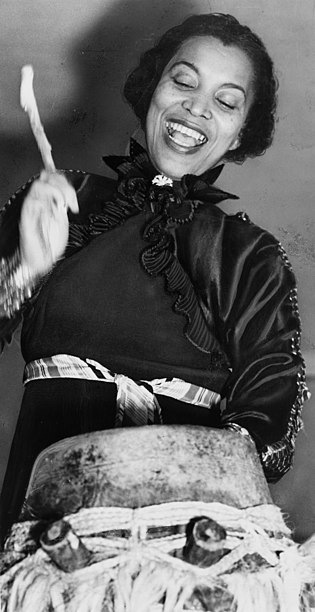
List of Symbolism in Zora Neale Hurston's Their Eyes Are Watching God

Zora Neale Hurston

  1. Tree Roots- African people without any roots
  2. The Pear Tree- Janie's budding womanhood
  3. The Mule- The black woman's experience. She does the worst jobs for the white people and black men. She gets "walked on." Logan buys Janie a mule to represent how he is tired of treating her like a princess or white woman, and now he wants her to do the heavy labor jobs around the farm.
  1. The Gate and the Road- Related to the metaphor at the beginning. The Gate is he shore and the Road represents the waves as Janie looks down the road to find a new dream.
  1. The Horizon- Janie keeps looking down the gate post to a new horizon, or a new start. Joe Starks had appeared on that new horizon.
  2. The Eatonville general store- represents the center of this first all-black town.
  3. The illumination of the lamp post represents the start of a new all-black town. It also shows that Joe Starks is all-powerful and likes others to bow down to him, including Janie.
  4. Joe and Janie's house is 2-story and looks like a plantation owner's house- it seems to represent his tyrant-like behavior, almost like the plantation owner, with the people of the town living in homes that are not as nice as his, almost like slave or servant quarters.
  5. Tobacco spittoon- This represents again how wealthy Joe is.
  6. Mule's funeral- represented everything in Janie's old life, and when Joe wouldn't let her go, it showed that he wasn't going to let her live like that anymore.
  7. Guitar- playful side of people
  8. Overalls- working side of people
  9. Janie's head rag- her bondage to Joe, that he has ultimate control over who she is and what she does
  10. Janie's long hair- Janie's freedom from Joe- that he doesn't actually control her anymore, and she is free to be who she wants
  11. The color blue- the proof of Janie and Tea Cake's love
  12. Fishing- Shows a sharing relationship between two people
  13. Checkers- Janie was never allowed to play checkers when she was with Joe, so she was not seen as equal until Tea Cake asked her to play after Joe had died
  14. Rabid dog- The change in Janie's good life with Tea Cake
  15. The dirt in The Muck- The working class' growth and strength that was gained during the time


Image found in wikimedia commons. Part of the public domain.

Monday, April 18, 2011

"You got to jump at da sun."

Don't accept your limits. No one can tell you what you can't do. Be like Elphaba and defy gravity, because the only person who is in control of your destiny is you.

Zora Neale Hurston


Born in 1891, Hurston was a black writer during the Harlem Renaissance. Though she was born in Notasugla, Alabama, her family moved to Eatonville, Florida when she was very young, and that's where she lived for most of her childhood. Hurston accumulated a collection of folklore from her hometown of Eatonville, and she continued that collection by gathering tales from Jamaica, Hati, Bermuda, and Honduras. Though her most famous work was Their Eyes Were Watching God, other works of hers include: Jonah's Gourd Vine, Seraph on the Suwanee, and Dust Tracks on a Road. One of the things that made Hurston significant in the literary world was that she wasn't afraid to address issues of race and gender in her works. So, in essence, she wasn't afraid to cause a bit of controversy in the community. Zora Hurston died at the age of 59 due to heath problems that she had developed over the years. She died in poverty and she had never been fully recognized for her works in life by the literary community. About 10-15 years after her death, her works were rediscovered by another generation of black writers, one of them being Alice Walker. This rediscovery of Hurston's works lead to a republication of many of her stories and novels that had previously been overlooked. A two-volume set of her works was published in 1995, so many years after her death.

Source:"Zora Neale Hurston." Microsoft® Student 2009 [DVD]. Redmond, WA: Microsoft Corporation, 2008.

A Whole New Kind Of Renaissance.

  • The Harlem Renaissance is also known as the New Negro movement, the New Negro Renaissance, or the Negro Renaissance.


  • This era started in about 1918, and lasted until the mid-1930's.


  • The significance of this era was that it was the time period in which African American media producers started being taken more seriously in the world of critics.


  • The movement of the Harlem Renaissance was mainly litterary, but also included parts of music, theater, art, and politics created or supported by African Americans.


  • By the turn of the century, things had changed so much for african americans that a black middle class had been formed.


  • In 1909, An organization called the National Association for the Advancedment of Colored People (NAACP) had been formed to protect the rights of black American citizens.


  • Harlem Shadows (1992), written by African American author Claude McKay, was one of the first literary works written by a black writer to get published by a relevant, mainstream publisher.


  • White novelist Carl Van Vechten's book, Nigger Heaven, did a great job of drawing out what harlem looked like, and it ended up drawing many New-Yorkers of all races to Harlem to experience the culture found there.


  • The Crisis and Opportunity were two newspapers who started employing black editors early on in the Harlem Renaissance.


  • The Great Depression was one of the leading causes of the end of the Harlem Renaissance, because people had less time and money to truly appreciate the arts that the black community was producing and being recognized for.

Langston Hughes

Description: https://blogger.googleusercontent.com/img/b/R29vZ2xl/AVvXsEgTg6WwcN8iqBqeyIM-HSNXf2HVPM3IZo-yqjwHvWeQ_iOzY8TI42XbAMPRaL44ZMW72MTRtx2kpdliQZmMm2PnF8GCyQsYrVF2PTqai-E8wrE5T4iHqaoYeSAp2jVrcIyK2OI3XThj-JM/s320/langston+hughes.PNG
  • Langston Hughes was an African American writer in the Harlem Renaissance.
  • Hughes explored many different areas of literature, including plays, poetry, and short stories.
  • One of the constant themes in his works was depicting the life of a citizen of Harlem, NY.
  • Hughes was mostly relevant in the 1920's.
  • His main genre of literature was short stories that used simple tales to tell what life was really like in Harlem.

Bessie Smith
Description: https://blogger.googleusercontent.com/img/b/R29vZ2xl/AVvXsEjgYaqnhWB3n_946UeOei6nVD8ZcrzZwXQXrGeDfacb6cM3ofqehOoQXw3nkL8IzG7FVPNPYMoLI_yRmHbfz_3wytXlXFFxNannVURu0_i11HaKCrETJ5ytu7y4EKOGt5O18yCyJ0KwIsg/s320/471px-Bessiesmith.jpg
  • Bessie Smith was an African American singer in the Harlem Renaissance. 
  • Bessie's nickname was the Empress of Blues.
  • She recorded with hit artists such as Benny Goodman and Louis Armstrong during her career.
  • Smith was famous mostly in the 1920's.
  • She had an emotional voice that made her very popular during the era of Blues.
  • Bessie's song, St. Louis Blues, can be found here: http://www.youtube.com/watch?v=jNWs0LsimFs

Duke Ellington
Description: https://blogger.googleusercontent.com/img/b/R29vZ2xl/AVvXsEjS0QzalfOk3WqEQW-tsJ4gmmFoeaQz3ThSqTwQVRo4iDxCFZLF8IjkGTafQCrmjxwC6GuQ-myiDBQttQ4mTnZh3oaIsq9YweYUF9BGIHEjlTON2EmZLNfG9MDNKO0pml72gd5lE8fV06I/s320/350px-Duke_Ellington_1.JPG
  • Duke Ellington was a famous African American musician during the Harlem Renaissance. 
  • Ellington was most famous for being a pianist, composer, and a band leader.
  • Ellington was one of the first composers to help develop the style we now know as "big band music," which became very popular during the Harlem Renaissance.
  • His orchestra was used as a sort of "workshop," as they tested out his new compositions and sounds.
  • Eventually Duke's style was named "The Ellington Effect," and became very popular during that time frame.
  • One of Ellington's famous compositions, Take The A Train, can be heard here: http://www.youtube.com/watch?v=bHRbEhLj54


Sources:
  • All information is found on Encarta
  • All pictures found on wikimedia commons

Into The Wild Final Project- Itching Feet

Song Lyrics


Long way far
From where I came
Nothing around here
Looks the same
My fears are far
And I'm finally
Living free


Can't you see?
This settled life
Has never been for me.
There's a land beyond the suburbs
And the ice cream truck summers
And this is the only way to scratch my 
Itching feet.

I'm lost
And I'm alone
Hope just seems
So far gone.

I'm starting to wish
There were more times I cared
The only happiness worth having
Is the happiness we've shared.


I'm starting to see
This settled life could have been for me
I've been missing those suburbs
And the ice cream truck summers
And I think I've finally scratched
My itching feet.


I've had a happy life
And thank the lord 
Goodbye and may
God bless all.

Wednesday, March 16, 2011

A Life Changing Odyssey.

                To be honest, the place I would want to go wouldn’t be a physical place. I hadn’t been on a plane until I was 11 years old, and I had to go with my dance team. My family has always taken road trips in cars instead of flying, because there are so many more experiences you can gain from the journey to your destination. The longer the journey, the more experiences you’ll get to have. I’ve always stuck with those ideas, and that’s why I think my “life changing adventure” would be a road trip across the U.S. They call America the “melting pot.” Our country is so diverse, it would be a shame to never be able to see it all. People always hear these clichés about things like life and happiness and success not being a destination, but a journey. No matter how corny it might sound, I’m a firm believer in that sort of thing. Maybe I’d start in D.C. and then head down to New Orleans for some Cajon food, and then experiences the massiveness of the open skies in Texas. To be honest, I don’t think I would plan it out. The unknown makes it all the more beneficial.

Wednesday, February 9, 2011

Into the Wild We Go!

Jon Krakauer's Into the Wild is based on a true story about a young man from Virginia who decided to hitch hike all the way to Alaska, with no means of contact between him and his family. After getting to Alaska, Chris McCandless decided to go traveling through the barren wilderness of America's 50th state with nothing but a rifle, a camera, and some reading material, which included a journal. McCandless' body ended up being discovered about two years later, in an abandoned bus, and that's where the story begins.


The entire novel is Krakauer's take on what he thinks happened to Chris during his time in the wild. Join me as I embark on this journey with Mr. McCandless, and find out what it really takes to survive in the wild.


Tuesday, January 25, 2011

Back to the Old Grind...

Exams are over, and it's finally time for the second semester to begin. After a few months at John Carroll, the thing I've most learned to keep in mind is responsible time distribution. In other words, priorities. Quite a few times this year, my short attention span has gotten me into trouble, and I've managed to get some poor grades on a few assignments. Beginning a new year and a new semester, I'm finally really opening my eyes to see that the assignments from teachers at John Carroll aren't going to be very easy most of the time. I'm going to have to find a way to sit down and plow through a couple hours of homework, while avoiding distractions. This is sure to be a challenge for me, but I'm up for it, and I sincerely believe that this semester is going to be the one in which I am able to finally tackle the beast and change my study habits.
Last semester, I got to spend a weekend in Ocean City, building my faith with my church.

I also spent some time playing with photo editing, improving technique a bit.
As a person, I've genuinely changed quite a bit since late August. I've learned how to operate on less sleep, get more work done in a short amount of time, and just be more efficient in general. But most of all, I think I've finally started to see where my heart lies in terms of desire. Lately, the thing I've wanted to do the most is write. I haven't always been finding time for it, but when I do, I feel myself getting totally lost in the words, forgetting about the world surrounding me. It's truly one of the best feelings I've ever experienced. I'm starting to keep up with my blog a bit more, and even dabble in a bit of poetry. Along with writing, I'm finding that I'm looking for some more time to set aside for dance. In all confusing times in my life, dance has always bee there for me. It's been that one constant that everyone talks about needing as a teenager. I'm starting to see that my day ends up being better if I begin it with a round of drills at the barre in the mornings. I'm thankful to the God that brought me the gift of words and the gift of dance, which are two things that I know how to use to my advantage and repaint life's picture with a little less pain and confusion, and a little more happiness and freedom.

Overall, my outlook for this semester is going to remain positive, and I am determined to become a better student, dancer, writer, and person overall. Thanks for sticking around, and remember, there's only 11 months 'till Christmas, so you should probably get shopping soon! Best Wishes,
~M.

Dream Sequence

In this dream, the colors were very vivid, and most likely symbolic.
The most recent dream I remember having actually took place a few months ago. I tend not to remember dreams when I wake up right away, but then a few weeks later, the dreams come back to me. Anyways, in this dream, I was in a room with wooden floors and walls with a huge window with flowing white curtains streaming from the trimming on one wall. I remember pacing around the room in circles, singing the songs off of my Jack’s Mannequin CD. All of the sudden, a man comes running in, and shoves me against the wall. He started asking me where “it” was, but I didn’t know what he was talking about, so I just kept screaming and trying to get away. Once I managed to slip from his grasp, I began running around the room franticly, trying to find a doorway that was no longer there. I turned around to see that the man had pulled a gun from his pocket, and he was running after me, shooting it in the air. Turning back around to keep running, I ended up tripping on one of the curtains from the window, and I heard a loud, CRACK! It was the bullet flying from the gun, hitting me in the back of the head. After that, the dream became part first person, part third person. I was viewing myself, lying on the ground, but at the same time, I saw the wall in front of me from a floor view. I heard a hissing noise that I knew was coming from my head, almost like in the cartoons when someone was deflating a balloon. I felt a strike of pain, and I cried “noooooooooooooo!” and this red filter came rising up through my vision, like someone was pouring red punch into a glass that I was looking through.  That was the last thing I remember, and then I woke up.